
The Daily Edge uses cookies. By continuing to browse this site you are agreeing to our use of cookies. Click here to find out more »
Dublin: 12 °C Saturday 25 May, 2013

Ten things you didn’t know about Ireland’s favourite saints

St Brigid was bulimic! St Therese restored the eyesight of Edith Piaf! St Nicholas is the patron saint of… what?!

TODAY, as if you needed reminding, is St Patrick’s Day – the feast day of St Patrick, the patron saint of Ireland, and the country’s national holiday.

And while most of the festivities of the day have little to do with religion, we thought we’d take a while to take a slightly sideways glance at our patron saint – and some others – to reveal some of the things you may never have known about some of them.

Ten things you didn’t know about Ireland’s favourite saints
1 / 10
  • 10 Things You Didn't Know About... (01)

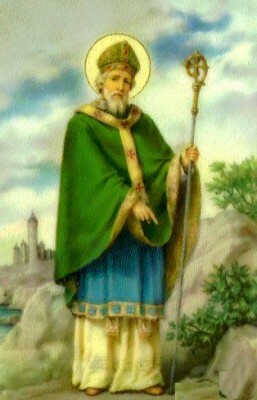
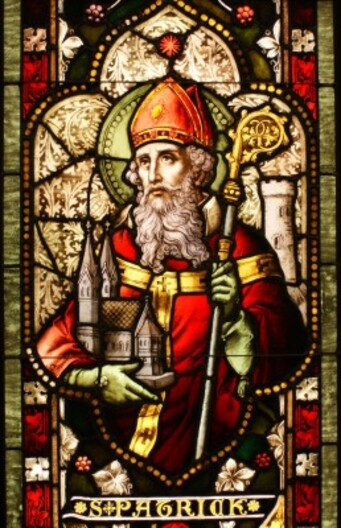
    Let's start with the man of the moment. St Patrick is the patron saint of Ireland, being credited with spreading Christianity to the island. Here's the thing, though: it might not have been him. Most modern theory is agreed now that there were, in fact, 'two Patricks' - suggesting that the historical legend of Patrick has been mixed up with that of St Palladius. That, or history has deliberately tried to scramble the two to create a single figure with a greater catalogue of success. Palladius is associated with Leinster, while Patrick himself is associated with Ulster and Connacht.
  • 10 Things You Didn't Know About... (02)

    Regardless of whether it's Patrick or Palladius you're thinking of, you probably didn't know that it's not just Ireland he's the patron of. He's also the patron saint of Nigeria (the story goes that Irish priests evangelised the country and gave it their own saint) and of Montserrat, which also marks the day as its national holiday and where Patrick appears (with a harp?) on the country's flag - alongside the Union Jack marking its status as a British overseas territory. St Patrick's Day is also a holiday in the Canadian province of Newfoundland and Labrador. (We don't know why.)# He's also the patron saint of curing toothache. It’s thought that when St Patrick (the Ulster one) was returning from a pilgrimage to Lough Derg, he stopped to drink from a well in Magherakeel - and was instantly cured of a dodgy chopper.
  • 10 Things You Didn't Know About... (03)

    Patrick wasn't the only saintly one in his family though. His nephew Germain - possibly the nephew of Palladius, admittedly - went to evangelise Paris, and in doing so became the patron saint of rape victims due to his success in stamping out the sexual abuse of women there.
  • 10 Things You Didn't Know About... (04)

    St Brigid, after Patrick, is probably Ireland's next best-known saint - though as it turns out, she may have also suffered from the same fate as Patrick; there was a saint Brigid and a Celtic Goddess Brigid knocking around at the same time. Regardless, Brigid was a legend among her peers: so much so that the priest who administered her last rites had his hand encased in metal afterwards, for fear it would ever touch another mere human.
  • 10 Things You Didn't Know About... (05)

    Brigid's life didn't go all that swimmingly, though: Brigid's mother Brocca was the mistress of a pagan chieftain, and was kicked out of her job as a slave when she fell pregnant. Brigid, as a result, was brought up by a druid who bought - bought! - her mother. She would milk his cows (giving all their milk away to the needy, however) and apparently had such difficulty eating their meat that she would bring herself to throw it back up again. This, if true, would make her one of the earliest sufferers of bulimia.
  • 10 Things You Didn't Know About... (06)

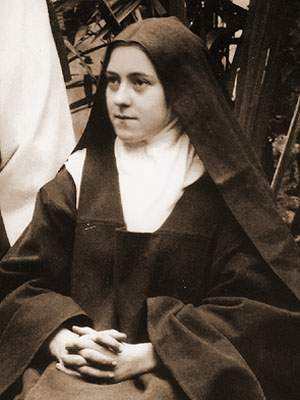
    St Therese of Lisieux is something of a rock star among saints. Living fast and dying young (at just 24), the 'little flower' is one of the world's best-travelled corpses - and attracted nearly three million visitors when she spent ten weeks in Ireland in 2001. But that's not the most striking thing: she apparently restored the sight of famous French songstress Edith Piaf. A harsh bout of keratitis left her blind from the age of 3, but her grandmother pulled together the money to send her on a pilgrimage to Therese's burial place, where she was miraculously cured. Therese wasn't even a saint at the time.
  • 10 Things You Didn't Know About... (07)

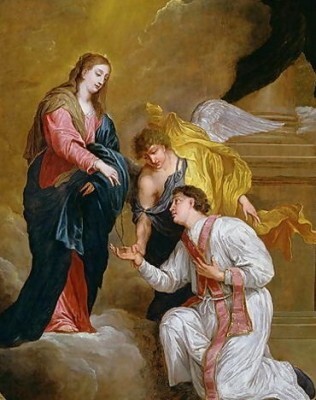
    St Valentine is a strange saint: he's become so well-known that many forget he was a saint at all. But - like Patrick and Brigid before him, in this list - he wasn't one saint, he was FOURTEEN, all of whom were martyred in ancient Rome. The bones of ONE of them were donated by Pope Gregory XVI to Dublin - where they now lie in the church at Whitefriar Street, just off Aunger St, alongside a small vial of his blood.
  • 10 Things You Didn't Know About... (08)

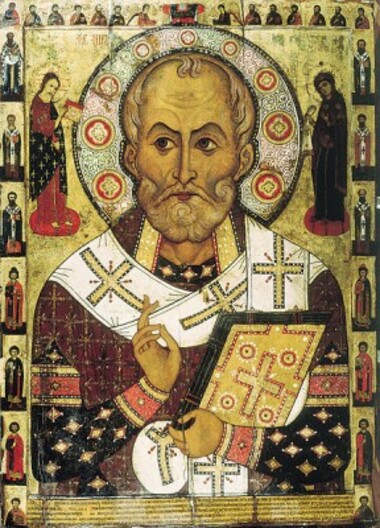
    St Nicholas is best known for leaving presents to good girls and boys every December 24. But how did he get that reputation? Well, it has something to do with how he's the patron saint of... prostitutes. Turkish legend has it that a poor neighbour of Nicholas had three teenage daughters. Because the poor man would not be able to offer any potential suitors for his daughters any meaningful dowry, when they reached adulthood they would likely have no career to enter other than prostitution. To save them from this, Nicholas allegedly entered the family home on the night before each sister came "of age" and left a pouch of gold coins - enough for each of them to handsomely live off.
  • 10 Things You Didn't Know About... (09)

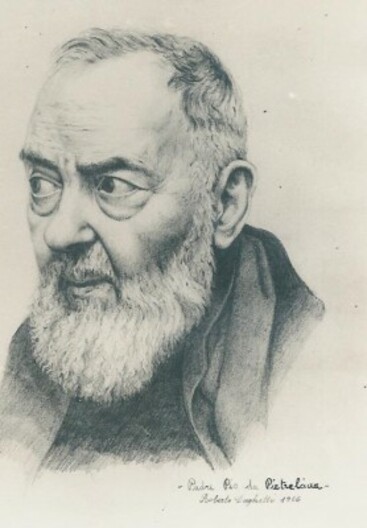
    Francesco 'Pio' Forgione, better known as 'Padre Pio', is one of the newer additions to the ranks of sainthood, being canonised in 2002 by Pope John Paul II. There's still ongoing debate, however, on whether his most famous trait - his decades-long stigmata - was genuine. Some claim that his wounds on his hands and feet were actually caused by the self-inflicted use of carbolic acid to stop them from healing over. This stems from the testimony of a chemist from whom Pio ordered 4g of the acid - an order Pio asked to keep secret - though the Church claimed he used it merely to steralise needles in his hospital. (That hospital saw Pope Pius XII grant him special dispensation from his vow of poverty in order to fundraise for the project.)
  • 10 Things You Didn't Know About... (10)
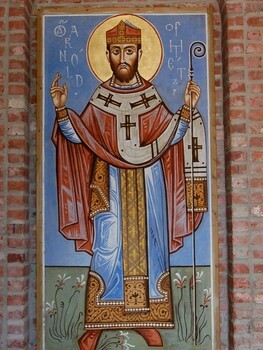
    Finally, one that many revellers during today's festivities will want to bear in mind. Millions of pints will be drank across Ireland to celebrate St Patrick's Day - so spare a thought for St Arnold of Soissons. Arnold, the abbot of a monastery, brewed beer and encouraged his parishioners to drink it instead of water, believing in its ‘gift of life’. As a result, he is known as the patron saint of beer and brewers. (Incidentally, one of St Brigid's believed miracles is that she used to turn her used bathwater into beer to offer to her guests. The Irish friendship with alcohol really does go quite a way back.)

Additional reporting by Jennifer O’Connell.

Read next:

Comments (11 Comments)

  • Damn, Colmcille ignored again. Considering he once went to war to defy a copyright law over a copy he made, he should be the patron saint of the internet kidz.

    Reply
    • indeed Gerald.. Colmcille is, in my book, our most interesting saint and i’ll bet there are more than 10 thinsg people didn’t know about him, yet there is more documentation of the life of Colmcille than Patrick & Brigid!
      the whole copyright story is fascinating… given it was even brought up in the recent IRMA case against UPC..
      i’m making a documentary about this as a side project to another if anyone is interested…
      there’s a very good paper by Ronan Sheehan here that’s well worth a read…
      http://www.tarasaga.com/news/columcilles-copybook

      Reply
  • “St Patrick’s Day is also a holiday in the Canadian province of Newfoundland and Labrador. (We don’t know why.)#”

    St. Patrick’s Day is celebrated in Newfoundland and Labrador as there is a large community of Irish-Canadians living in the province. According to the 2001 Canadian census, the largest ethnic group in Newfoundland & Labrador is English (39.4%), followed by Irish (19.7%), Scottish (6.0%), French (5.5%), and First Nations (3.2%). The largest single religious denomination in the province is Roman Catholicism (36.9%), with Anglicans at 26.1%, the United Church of Canada at 17%, Salvation Army at 7.9% and Pentecostal at 6.7%. The province was first colonised by Britain in the 1600s. Throughout that century and the 1700s large populations of Irish emigrated to Newfoundland (Indeed it is the only place outside of Europe with a uniquely Irish name – Talamh an Éisc or Land of Fish). When the province (or colony as it was at the time) was being divided up for religious purposes (into parishes and such) it was acknowledged that Irish was the primary language in large sections of the province. This dialect of Irish, known as Newfoundland Irish, persisted in small communities (primary in the Avalon Peninsula) up until the middle of the 1950s, and is currently being revived, albeit in the Caighdeán Oifigiúil form. Even the modern author Tim Pat Coogan has described Newfoundland as “the most Irish place in the world outside Ireland”. Today, the unofficial flag of Newfoundland (excl. Labrador) is a vertical tricolour consisting of green, white and pink vertical bars (similar to the ROI flag except substituting pink for orange). Basically, it is the Irish ancestry of the province and its ties with Ireland that have led to Newfoundland and Labrador “adopting” St. Patrick’s Day.

    Reply
  • I’ve just remembered that the Vatican took St Patrick off its list of official saints a number of years ago and there was such an uproar from the Irish Hierarchy that they re-instated him.

    Reply
  • St Palladius Day… Doesnt sound the same …

    Reply
  • It’s not St Patrick on Montserrat’s coat of arms and flag. It’s a female personification of Ireland!ha!

    Reply
  • I love they way the Vatican can just change the rules every now and again.

    Reply
  • “one of the world’s best-travelled corpses” ROTFLMAO

    Reply
  • How sad is that…. All we need to kno is we can get pissed and have an excuse for it!

    Reply

Add New Comment