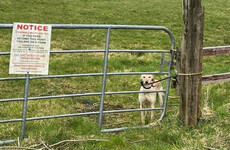
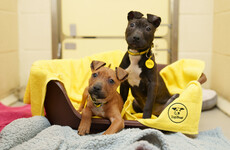
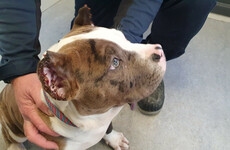
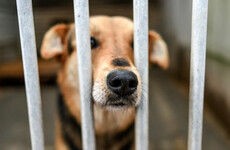
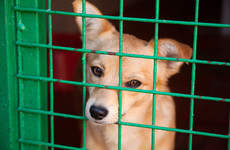
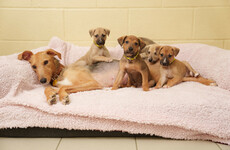
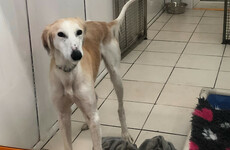
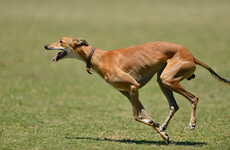
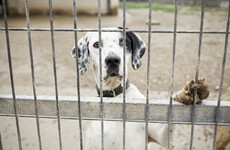
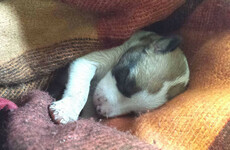
Some of the puppies were left in bags in a graveyard and along a canal while others arrived with serious burns on their paws from standing in their own urine.
Andrew Doyle TD welcomes the chance to discuss the Bill – saying that animal health, animal welfare and farm profitability are interlinked and “of equal importance”.
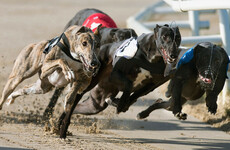
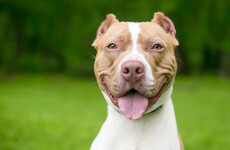
Puppy farms will be targeted in new legislation due to be enacted very soon – but there has been a delay while the government waited for the Welfare of Greyhounds Bill to be passed through the Seanad.
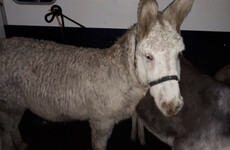
The Irish Horse Welfare Trust, which looks after almost 100 animals, says it needs donations to help with the care and upkeep of some of its residents.
THAI AUTHORITIES RESCUED a two-month-old tiger cub from a woman’s suitcase as she attempted to smuggle the animal out of the country on Sunday.
The drugged baby tiger was among a bag full of stuffed tiger teddies.
Airport authorities became suspicious when they spotted the woman struggling with the heavy bag. The live cub showed up in the x-ray check of the bag.
The woman was due to board a flight from Bangkok to Iran, when the sedated wildcat was discovered.
The cub is being cared for by specialists at a rescue centre in Thailand.
Chris Shepherd, from the animal protection organisation Traffic, praised authorities for rescuing the animal, and called for stronger monitoring systems and deterrents to be put in place.
If people are trying to smuggle live tigers in their check-in luggage, they obviously think wildlife smuggling is something easy to get away with and do not fear reprimand.
Only sustained pressure on wildlife traffickers and serious penalties can change that.
Traffic says that tiger populations through Asia are threatened by smugglers, despite being listed as an endangered species.
Thai officials are investigating whether the cub was bred in captivity, or captured from the wild.
[caption id="attachment_15731" align="alignnone" width="512" caption="A Thai veterinarian feeds the baby tiger cub at the Wildlife Health Unit at the Department of National Parks in Bngkok Thailand on 27 August, 2010."][/caption]
THE UK’S Food Standards Agency (FSA) has said that meat from a cloned cow, which had not been subjected to safety tests, had entered the food chain last year and was probably eaten.
The FSA said that the meat from one of two bulls born in the UK from embryos harvested in the United States had entered the food chain, though authorities had managed to track and remove the meat from the other cow before it was sold.
While there were no indications that the meat was inherently unsafe, it explained that meat products produced by cloned cattle were considered ‘novel foods’ – classified similarly to genetically modified food – and that they required intensive testing under EU law before being cleared for sale.
The news comes two days after both the FSA and dairy industry insisted that no milk or meat from cloned animals had entered the food chain.
A spokesman for the RSPCA, which opposes animal cloning, said: “Some unsuspecting person has eaten this meat. And we just don’t know whether it is harmful for human health, but we do know there are serious welfare issues.”
The announcement marks Britain’s biggest food scare since the emergence of variant CJD, a fatal brain disease contracted by eating meat from cows with ‘Mad Cow Disease’ which had not been accurately traced.
An animal geneticist from Trinity College has previously said it would be relatively easy to track the meat from cloned cattle if the authorities so desired.